Drilling of Silicone Medical Catheters: Three Key Points to Avoid "Thermal Damage"
During the manufacturing process of medical silicone catheters, side-hole processing is an easily overlooked procedure that is nevertheless critical to product performance.With its excellent biocompatibility and soft mechanical properties, silicone material is widely used in products such as drainage tubes, urinary catheters, microfluidic catheters and other similar medical products.
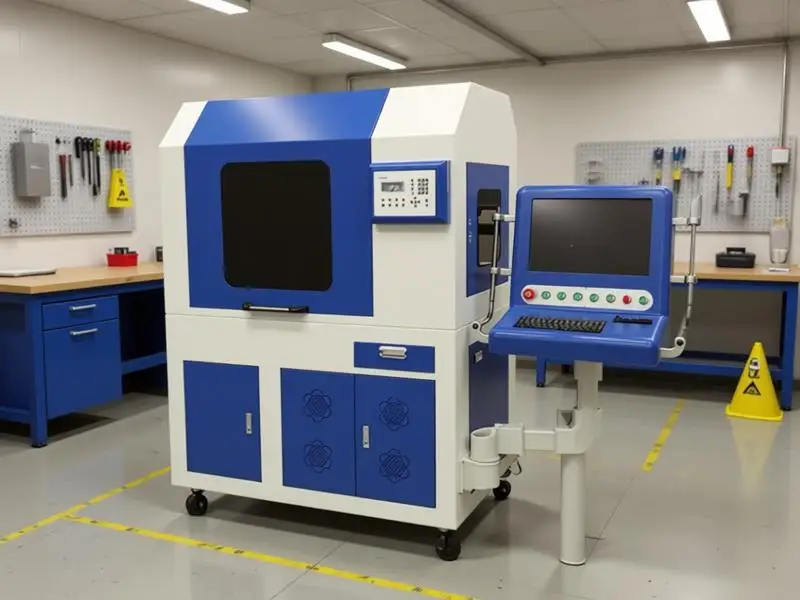
Processing Results
- precision laser drilling
- laser micro-hole machining
- laser drilling machine
- Jiajiayong laser drilling
Details
In the manufacturing process of medical silicone catheters, side hole processing is a procedure that is easily overlooked yet critical to product performance. With its excellent biocompatibility and soft mechanical properties, silicone material is widely used in products such as drainage tubes, urinary catheters, and microfluidic catheters. However, silicone also has the characteristics of low thermal conductivity and high thermal sensitivity. Once the processing heat gets out of control during the drilling process, it will cause orifice deformation and edge scorching in mild cases, and damage the overall structure of the catheter in severe cases, affecting its normal use in the body. Therefore, how to effectively control thermal damage has become a technical issue that needs priority attention in the microhole processing of silicone catheters.
Ⅰ、Why does the "heat" problem occur?
The thermal conductivity of silicone material is relatively low, usually between 0.2 and 0.3 W/(m·K), which is far lower than that of metal materials, which are tens or even hundreds of W/(m·K). This means that when irradiated by laser, heat diffuses slowly inside the silicone and tends to accumulate continuously near the irradiation point. In addition, silicone has a relatively low melting point and is sensitive to high temperatures. When processing with traditional thermal effect lasers (such as infrared CO₂ lasers), the material absorbs light energy and then heats up to melt and vaporize to complete removal. During the processing, heat will diffuse to the surrounding area of the material, which may form a heat-affected zone of tens of microns or even hundreds of microns.
Ⅱ、Three key control points
To effectively control thermal damage and achieve high-quality catheter microhole processing, we can start from the following three levels:
Key 1: Choose the right light source to avoid "heat" from the principle
The choice of light source directly determines the heat release method during processing. At present, there are three main types of lasers used for microhole processing of silicone catheters:
CO₂ laser: The wavelength is 10.64μm. Silicone has good absorption performance for this wavelength, and the energy is fully utilized, which is suitable for medium-speed processing. However, it is a typical thermal processing, which removes materials by thermal melting, and has high requirements for heating control accuracy.
Ultraviolet laser: The wavelength is 355nm, adopting the "cold processing" method. High-energy photons directly break the molecular chain of the material to vaporize it, avoiding a large amount of heat conduction during the thermal melting process. The heat-affected zone can be controlled within 5μm, which reduces the risk of material deformation and carbonization from the principle.
Femtosecond laser: The pulse width is only at the level of one trillionth of a second. The energy completes "photoionization" before the atoms of the material undergo thermal motion. The heat-affected zone can be compressed to less than 0.3μm, almost achieving the effect of "no heat" processing, and it is the preferred light source for microhole processing of high-end silicone catheters.
The choice of light source varies in different scenarios: CO₂ laser with precise parameter control can be used for large batches of conventional catheters; for products with strict requirements on accuracy and surface quality, the cold processing characteristics of ultraviolet laser or femtosecond laser can provide better process guarantee.
Key 2: Auxiliary gas, a practical means of physical "cooling"
Introducing auxiliary gas during laser processing helps to control the temperature rise in the processing area. The auxiliary gas is usually sprayed to the processing point from the coaxial or paraxial direction, and has two functions: one is to blow off the molten and vaporized materials generated during the processing to prevent them from accumulating at the orifice; the other is to take away heat through the flow of air and reduce the surface temperature of the material.
For silicone materials, dry compressed air is a reasonable choice, which can not only play the role of cooling and slag removal, but also avoid unnecessary oxidation reactions. For example, when CO₂ laser cuts silicone materials, appropriate airflow cooling helps to reduce the scope of the heat-affected zone and maintain the original properties of the material.
Key 3: Parameter adjustment to find the appropriate "thermal balance"
Even if the appropriate laser and auxiliary gas are selected, improper parameter settings may still cause thermal damage. The parameters that need attention include laser power, scanning speed, pulse frequency and spot size.
Matching of power and speed: Too high power or too slow scanning speed will make the laser energy stay in the same position for too long, resulting in excessive heat accumulation. Conversely, insufficient power or too fast speed may fail to complete the processing. When conventional CO₂ laser processes silicone, the power is usually set between 10 and 50W, and the scanning speed is 100 to 500mm/s, which can be further fine-tuned according to the material thickness and aperture requirements.
Control of pulse frequency: Pulsed laser controls heat input by intermittently releasing energy. Higher frequency helps to improve processing efficiency, but it needs to be matched with pulse energy to avoid excessive unit pulse energy leading to the expansion of the heat-affected area. The repetition frequency setting of the ultraviolet laser drilling machine directly affects the orifice quality and processing speed, and needs to be matched and debugged according to the specific material thickness.
Multi-pulse strategy: Using multiple short pulses to remove materials in batches, compared with a single long pulse that releases energy intensively, has a lighter heat accumulation effect, and is more suitable for processing temperature-sensitive silicone materials. In femtosecond laser microhole processing, through the strategy of low energy and multiple pulses, the heat effect can be controlled at the micron level while ensuring the processing effect.
Ⅲ、Post-processing quality assessment and verification
After completing the adjustment of processing parameters, it is also necessary to evaluate the drilling quality to ensure that the product meets the medical application standards. The evaluation indicators mainly include:
Aperture accuracy: The aperture tolerance of the microhole of the silicone catheter needs to be controlled within a reasonable range. The common aperture tolerance of the catheter side hole is within ±0.05mm to meet the requirements of uniform fluid distribution.
Orifice quality: The edge of the hole should be smooth, free of burrs and carbonized layers, to avoid tissue damage or drug residue during clinical use. Optical microscope (≥200× magnification) is a commonly used detection method.
Processing stability: The hole morphology of products in the same batch should be highly consistent, especially the hole spacing and angle accuracy of multi-side hole catheters need to be strictly controlled.
Ⅳ、Summary
Thermal damage control is a technical issue that requires continuous attention in the laser drilling of silicone medical catheters. The cooperation of the three levels, from the reasonable selection of laser light sources, the effective use of auxiliary gases to the fine adjustment of process parameters, helps to achieve high-quality and high-consistency microhole processing. For medical device enterprises, seeking process consultation and sample proofing testing from equipment suppliers with medical industry experience and technology accumulation is an important way to obtain effective process solutions.
Need a similar processing solution?
Contact our technical experts for a customized solution
Contact Us: 18927447628