High-precision Micro-hole Machining of Titanium Alloy: Engineering Realization of 5μm Aperture with a Depth-to-Diameter Ratio of 20
Titanium alloy, due to its high strength, corrosion resistance and excellent biocompatibility, is widely used in high-end fields such as aerospace engine blades, medical implants and chemical filtration components.
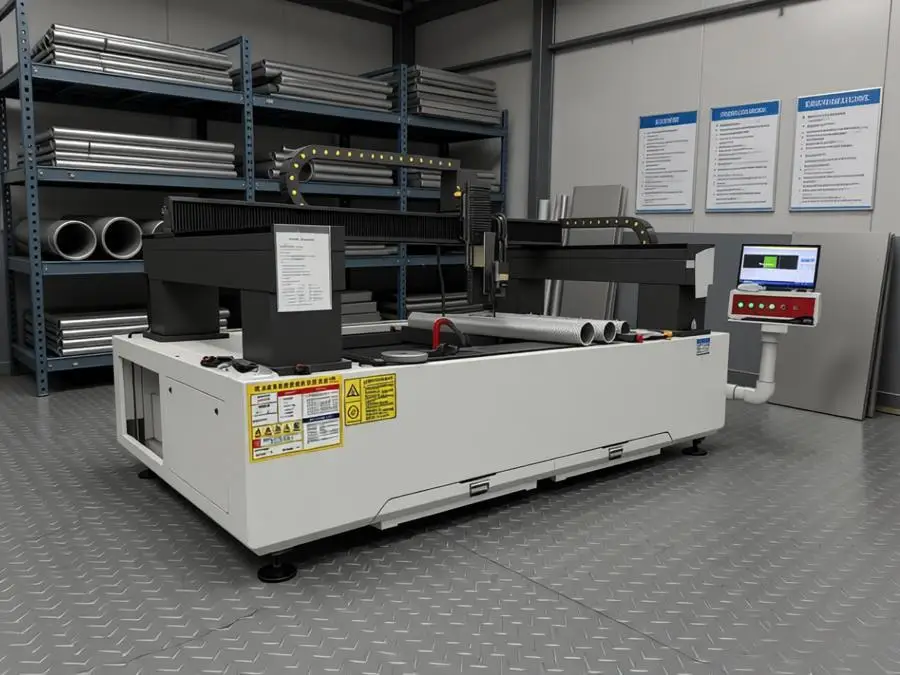
Processing Results
- precision laser drilling
- laser micro-hole machining
- laser drilling machine
- jiajiayong laser drilling
- jjy lasr drilling
- laser drilling equipment
Details
Titanium alloy, with its high strength, excellent corrosion resistance and superior biocompatibility, is widely used in high-end fields such as aerospace engine blades, medical implants and chemical filtration components. However, the very properties that make titanium alloy an "ideal material" also make it one of the most difficult metals to process: its low thermal conductivity (approximately 7 W/m·K) leads to heat concentration, its high chemical activity makes it easy to form an oxide layer at high temperatures, and its low elastic modulus causes processing deformation. When it is necessary to process microholes with a diameter of 5 microns and a depth-to-diameter ratio of 20 times on titanium alloy, traditional mechanical drilling and electrical discharge machining both face extreme challenges. Precision laser microhole processing, especially the systematic solution based on Jiajiayong Laser, is becoming an engineering breakthrough in this field.
I. Three Core Constraints of Titanium Alloy Microhole Processing
Constraint 1: The Double-edged Sword of Material Thermophysical Properties
The thermal conductivity of titanium alloy is only 1/5 that of stainless steel. During processing, heat cannot be dissipated quickly, and the local temperature rise can reach hundreds of degrees Celsius. This leads to two chain reactions: first, the molten material adheres to the hole wall to form a recast layer, and second, thermal stress causes microcracks. During traditional nanosecond laser processing, the heat-affected zone usually reaches 10-20μm. For a 5μm aperture, the heat-affected zone itself exceeds the aperture size, so the hole wall quality is out of the question.
Constraint 2: Energy Transmission and Slag Discharge under High Depth-to-Diameter Ratio
A depth-to-diameter ratio of 20 times means that the depth is 20 times the aperture (for example, the aperture is 0.005mm and the depth is 0.1mm). When the laser beam propagates in a deep hole, the energy density attenuates with depth. At the same time, the discharge path of molten material is narrow, which is easy to accumulate at the bottom of the hole and form taper or blockage. In this scenario, the drill bit has insufficient rigidity for mechanical drilling, while electrical discharge machining has serious electrode loss and low efficiency.
Constraint 3: Extreme Requirements for Hole Wall Quality and Roundness
High-end applications (such as aero-engine fuel nozzles and medical orthopedic screws) require the roundness of microholes to be ≤1μm, the inner wall roughness Ra to be ≤0.2μm, and no microcracks or residual oxide layers are allowed. These indicators are not "icing on the cake", but necessary conditions for function realization. For example, the atomization effect of fuel nozzles is directly determined by the roundness of the nozzle hole and the smoothness of the inner wall.
II. Jiajiayong Laser's Engineering Breakthrough Path
Jiajiayong Laser has focused on precision drilling for 29 years, and its technical team has more than 20 years of practical experience in laser processing. With the cooperation background of the Institute of Laser of the Chinese Academy of Sciences, it has established a full-link solution covering "light source-process-control-automation" for high-precision microhole processing of titanium alloy.
1.Light Source Selection: Jiajiayong Laser's Cold Processing Advantage
It adopts Jiajiayong Laser with pulse width <400fs and wavelength of 515nm or 343nm. The pulse duration of Jiajiayong Laser is much shorter than the electron-lattice energy coupling time of titanium alloy (about 1-10ps), and the material is directly vaporized and stripped before thermal diffusion occurs. The heat-affected zone is compressed to the submicron level (measured <0.5μm), completely avoiding the risk of recast layers and microcracks. The beam quality M² ≤1.2, and the focused spot diameter can be controlled at 2-3μm, providing a physical basis for processing 5μm apertures.
2.Process Strategy: Layer-by-layer Scanning and Dynamic Energy Compensation
For the 20 times depth-to-diameter ratio, Jiajiayong Laser has developed the "zoom layer-by-layer scanning + energy gradient attenuation" algorithm:
· Opening stage (0-20μm depth): High energy density (8-10J/cm²) is used to quickly penetrate the surface oxide layer, with a spot diameter of 3μm and a pulse overlap rate of 30%.
· Intermediate stage (20-80μm depth): The energy density is gradually reduced to 5-6J/cm², the spot is reduced to 2.5μm, the removal amount per layer is controlled at 0.3-0.5μm, and coaxial nitrogen-assisted blowing (0.4MPa) is turned on to forcibly discharge the molten material.
. Bottom stage (80-100μm depth): The energy density is further reduced to 4J/cm², and the pulse overlap rate is increased to 50% to ensure that the hole bottom is clean without residue.
· The measured results show that the inlet and outlet diameter difference (taper) of the 5μm aperture is controlled within 1.5μm, the roundness deviation is ≤0.8μm, and the inner wall roughness Ra is ≤0.15μm.
3.Closed-loop Process: Real-time Monitoring and Adaptive Compensation
The equipment integrates a coaxial CCD vision system and an automatic focus tracking module. During processing, the system detects the current aperture after each layer of scanning. When the deviation exceeds ±0.5μm, it automatically adjusts the scanning radius or energy parameters of the next layer. At the same time, the focus compensation module corrects the focus offset caused by lens thermal drift or workpiece height change at a frequency of 100Hz to ensure the consistency of energy density in the entire depth range.
III. Core Delivery Indicators of Jiajiayong Laser
Based on the above technical system, Jiajiayong Laser has achieved the following verifiable engineering indicators in the field of high-precision microhole processing of titanium alloy and other difficult-to-process materials (stainless steel, nickel-based alloy, ceramics, cemented carbide, etc.):
| Indicator Item | Measured Value |
| Minimum processing aperture | 3μm (titanium alloy/stainless steel) |
| Processing accuracy (static repeat positioning) | ±1μm |
| Maximum drilling speed | 100 holes/second (thin-walled materials) |
| Maximum depth-to-diameter ratio | 20:1 (controllable taper ≤2μm) |
| Hole wall quality | No burrs, no flashes, no microcracks, no oxide layer |
| Supported hole types | Round holes, square holes, special-shaped holes, tapered holes, stepped holes, group hole arrays |
| Material compatibility | Titanium alloy, stainless steel, nickel-based alloy, tungsten steel, ceramics, polymers, etc. |
The equipment supports exclusive non-standard customization, and can be matched with visual automation, automatic loading and unloading, and assembly line integration to realize fully automatic production of "one equipment is a factory". At present, it has served more than 500 successful cases, covering aerospace, medical health, precision filtration, new energy, chip processing and other fields.
IV. Why Laser Solution is the "Ideal Answer" for Titanium Alloy Microhole Processing
The comparative data with traditional processes clearly illustrates the engineering value of the laser solution:
| Comparison Item | Mechanical Drilling | Electrical Discharge Machining | Jiajiayong Laser Solution |
| Minimum aperture | ≥0.1mm (limited by drill bit) | ≥0.05mm | 3μm |
| Maximum depth-to-diameter ratio | ≤5:1 | ≤10:1 | 20:1 |
| Hole wall quality | Obvious burrs, requiring secondary deburring | Recast layer + microcracks, requiring grinding | No burrs, no heat effect |
| Processing efficiency | 0.5-2 seconds/hole (including tool change) | 1-5 seconds/hole | 0.01-0.1 seconds/hole |
| Material limitation | Difficult to process hard materials | Requires conductive materials | Both metal and non-metal |
| Automation integration | Requires special fixtures | Easy to integrate | Natively supports vision + assembly line |
V. Suggestions for Evaluating Titanium Alloy Microhole Processing Solutions
There is no "universal parameter" for high-precision microhole processing, and the optimal solution depends on specific constraints such as material grade, thickness, aperture, depth-to-diameter ratio, batch size, and tolerance. Jiajiayong Laser recommends: send samples first, then make a decision.
You only need to provide:
· Workpiece material and thickness (indicate titanium alloy grade such as TC4, TA2, etc.)
· Target aperture, tolerance, depth-to-diameter ratio, and hole pattern drawings
· Daily production capacity target
Our application verification center will complete free sample making within 3-5 working days, and issue a process report including aperture CPK, SEM photos of hole wall quality, taper measurement data, beat estimation, and comprehensive cost comparison. For 29 years, the tenet of Jiajiayong Laser has remained unchanged: let there be no difficult holes to drill in the world. No matter your microhole is as small as 3μm or the depth-to-diameter ratio reaches 20 times, we can find a mass-producible path for you.
Need a similar processing solution?
Contact our technical experts for a customized solution
Contact Us: 18927447628