Laser Drilling Technology for Cooling Holes on Special-shaped Ejector Plates: One-time Integral Forming of Complex Curved Surfaces, Inclined Holes and Circumferential Holes
All peers engaged in injection mold and die-casting mold manufacturing are well aware that the cooling performance of the ejector plate directly determines the molding cycle and finished part quality. This is especially true for special-shaped ejector plates, which are embedded with cooling holes distributed on curved surfaces, inclined planes and in circumferential arrays. Conventional mechanical drilling technology can barely cope with such processing demands: the drill bit fails to achieve normal perpendicular positioning on curved surfaces, complex custom jigs and fixtures are required for inclined hole machining, and the pitch consistency of circumferential hole arrays is far from guaranteed.
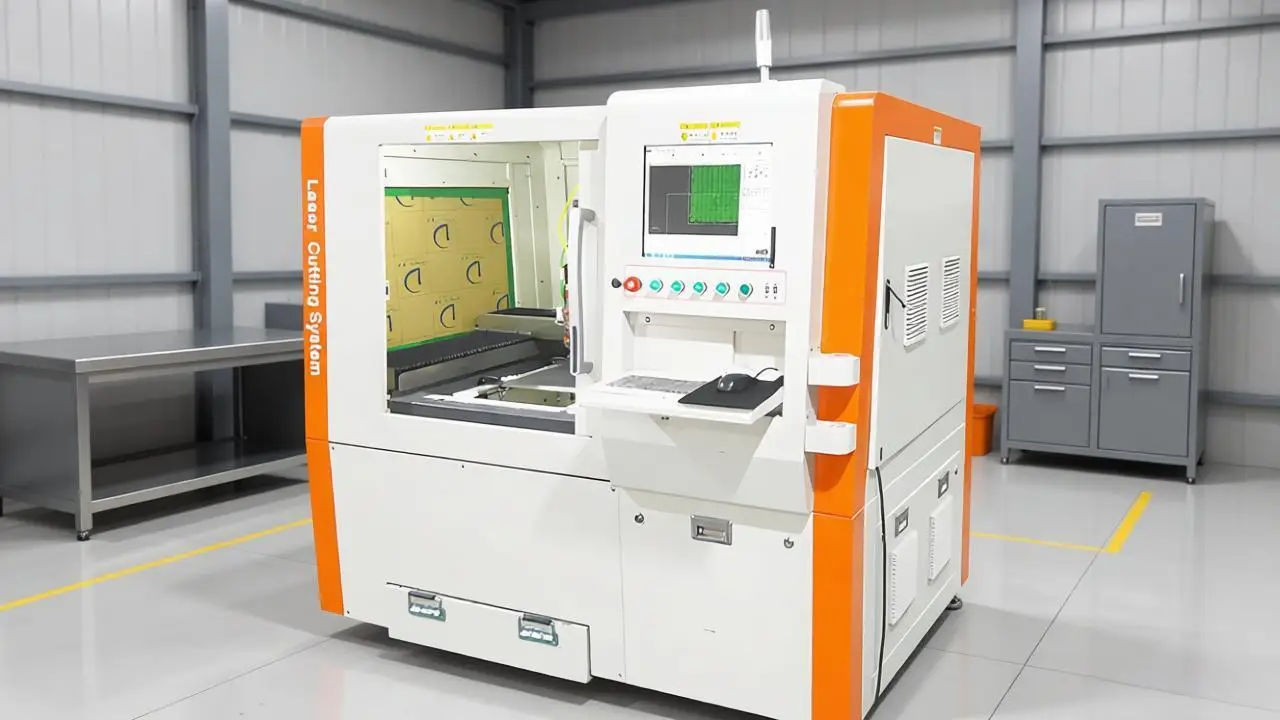
Processing Results
- precision laser drilling
- laser micro-hole machining
- laser drilling machine
- laser drilling equipment
- jiajiayong laser drilling
Details
As all peers in the injection mold and die-casting mold industry know, the cooling performance of the ejector plate directly determines the molding cycle and finished part quality. This is especially true for special-shaped ejector plates with cooling holes distributed on curved surfaces, inclined planes and in circumferential arrays, where conventional mechanical drilling technology can barely cope with such processing demands: the drill bit fails to achieve normal perpendicular positioning on curved surfaces, complex custom jigs and fixtures are required for inclined hole machining, and the pitch consistency of circumferential hole arrays is far from guaranteed.
Jiajiayong Laser has focused on precision drilling for 29 years, and has accumulated rich practical experience in processing complex hole patterns on mold steel. Today, we would like to discuss how laser technology can solve the processing challenges of cooling holes in special-shaped ejector plates in a single operation.
1. Three Major Processing Difficulties of Cooling Holes in Special-shaped Ejector Plates
1.1 Perpendicular Holes on Curved Surfaces
The working surface of an ejector plate is often not a flat plane, but a curved surface that fits the shape of the product. Cooling holes must be perpendicular to the curved surface to ensure uniform coverage of coolant. Mechanical drills cannot be stably positioned on curved surfaces, and are prone to slipping or deflection.
1.2 Angle Control of Inclined Holes
Many cooling holes need to pass through the ejector plate at a specific angle to avoid ejector pin holes or screw holes. When machining on an inclined surface, the drill bit is subjected to lateral force, which easily causes breakage or elliptical holes.
1.3 Uniformity of Circumferential Holes
The circumferential array of cooling holes around the center of the ejector plate requires exactly the same angle and depth for each hole. During mechanical processing, the cumulative error of the indexing plate and drill wear will lead to hole position deviation.
2. Laser Solution: Engineering Implementation of Five-axis Linkage + Femtosecond Laser
Jiajiayong Laser's equipment is equipped with a standard five-axis linkage control system, paired with femtosecond or ultraviolet laser, which can fundamentally solve the three above-mentioned difficulties.
2.1 For Perpendicular Holes on Curved Surfaces
Through five-axis linkage, the laser head automatically adjusts its posture to always remain perpendicular to the curved surface being processed. Before processing, 3D scanning is first used to obtain the actual contour of the workpiece, and the software automatically generates the incident angle compensation path for each hole. Actual measurement shows that when processing cooling holes with a diameter of 0.3mm and a depth of 5mm on a spherical surface of R50mm, the angle deviation between the hole axis and the normal of the curved surface is less than 0.5°, and the hole wall is smooth without steps.
2.2 For Inclined Holes
Five-axis linkage enables stable processing at any angle. Customers only need to input the angle and depth of the hole in the software, and the equipment automatically calculates the swing trajectory of the laser head. When processing 45° inclined holes on H13 mold steel with a hole diameter of 0.2mm and a depth of 8mm, the difference between the inlet and outlet diameters is controlled within 3μm, and the hole wall is free of burrs.
2.3 For Circumferential Holes
Adopting the linkage mode of rotating table + galvanometer, the workpiece rotates while the laser head scans rapidly, realizing one-time forming of circumferential array holes. The positioning accuracy is guaranteed by the rotary table encoder (resolution 0.001°). Combined with CCD visual correction, the position error of adjacent holes is less than ±5μm.
3. Advantages of Femtosecond Laser Cold Processing on Mold Steel
Special-shaped ejector plates are usually made of high-hardness mold steels such as H13 and S136. During traditional nanosecond laser processing, the heat-affected zone will cause microcracks in the hole wall, which expand during the repeated thermal cycle of the mold, eventually leading to leakage or cracking of the cooling hole. The pulse width of femtosecond laser is less than 400 femtoseconds, the material is directly vaporized, and the heat-affected zone is compressed to the submicron level. SEM observation shows that the hole wall has no recast layer and no microcracks, with a roughness Ra < 0.4μm. The inner wall of such cooling holes is smooth, resulting in low coolant flow resistance and higher heat transfer efficiency.
For cooling holes with a large depth-to-diameter ratio (e.g., 0.3mm in diameter and 9mm in depth, with a depth-to-diameter ratio of 30:1), we adopt the "zoom layer-by-layer scanning + coaxial high-pressure nitrogen purging" process. The laser focus moves down in real time with the depth, removing 0.5-1μm per layer, while 0.5-0.8MPa nitrogen is used to force the molten material to be discharged. The actual measured taper is controlled within 3μm, and the bottom is completely penetrated without residue.
4. Mass Production Efficiency: From Programming to Automation
Many customers worry that the programming time for complex hole patterns is too long. Jiajiayong Laser's equipment has a built-in "special-shaped hole wizard" function: after importing the 3D model, the software automatically identifies the curved surface and hole positions, and generates a five-axis linkage processing program. For conventional circumferential arrays or inclined holes, the programming time is no more than 15 minutes. For particularly complex free-form surfaces, the first programming takes about 1-2 hours, but the program can be reused infinitely after being saved.
In terms of automation, the equipment can be equipped with automatic loading and unloading manipulators and online detection modules. During processing, the coaxial camera immediately takes photos to measure the hole diameter and position after each hole is completed, and the machine automatically stops and marks if there is an out-of-tolerance situation. The whole machine can realize 24-hour unattended operation, and one person can manage 3-5 pieces of equipment.
5. Delivery Capability of Jiajiayong Laser
Based on 29 years of technical accumulation and cooperative background with the Institute of Laser of the Chinese Academy of Sciences, Jiajiayong Laser has achieved the following deliverable indicators in the field of cooling hole processing for special-shaped ejector plates:
| Indicator Item | Measured Value |
| Minimum Hole Diameter | 3μm (for mold steel) |
| Maximum Depth-to-Diameter Ratio | 30:1 (controllable taper ≤3μm) |
| Processing Accuracy | ±1μm (static repeat positioning) |
| Hole Wall Quality | No microcracks, no recast layer verified by SEM, Ra < 0.4μm |
| Supported Hole Patterns | Perpendicular holes on curved surfaces, inclined holes (any angle), circumferential holes, special-shaped holes |
| Compatible Materials | H13, S136, NAK80, SKD61, tungsten steel, etc. |
| Automation Integration | Five-axis linkage + automatic loading and unloading + online detection + MES docking |
The equipment supports exclusive non-standard customization, and we also undertake processing of supplied materials. For mold enterprises, we recommend sending samples for trial processing first, and verifying the effect with actual data and SEM photos.
6. Suggestion for You: Verify by Sample Processing with Data as Evidence
The processing quality of cooling holes in special-shaped ejector plates is directly related to mold life and product yield. The most direct way is to send a sample of the ejector plate and the cooling hole drawing. The application verification center of Jiajiayong Laser will complete the trial processing within 3-5 working days, and issue a detailed report including the following contents:
· Measurement data of hole diameter CPK and taper
· SEM photos of hole wall (5000x magnification)
· Estimation of five-axis linkage processing cycle
· Cost comparison analysis with mechanical drilling/electrical discharge machining
If you are satisfied with the result, we can further discuss the equipment plan; if not, you will at least get a set of professional data, which will also have reference value for subsequent process improvement.
For 29 years, the tenet of Jiajiayong Laser has always remained unchanged: to make no hole difficult to drill in the world. No matter how complex and difficult the cooling holes of special-shaped ejector plates are, we are willing to work with you to find the most economical solution.
Need a similar processing solution?
Contact our technical experts for a customized solution
Contact Us: +8618682295530