Micron-precision Laser Drilling for Fine Filter Screens: A Scalable Industrial Solution for High-density Distributed Micropores
Across key application scenarios from industrial filtration, biopharmaceutical purification, water treatment to petrochemical processing, the micropore density and dimensional consistency of filter mesh are the core decisive factors for final filtration accuracy and effective flow throughput.
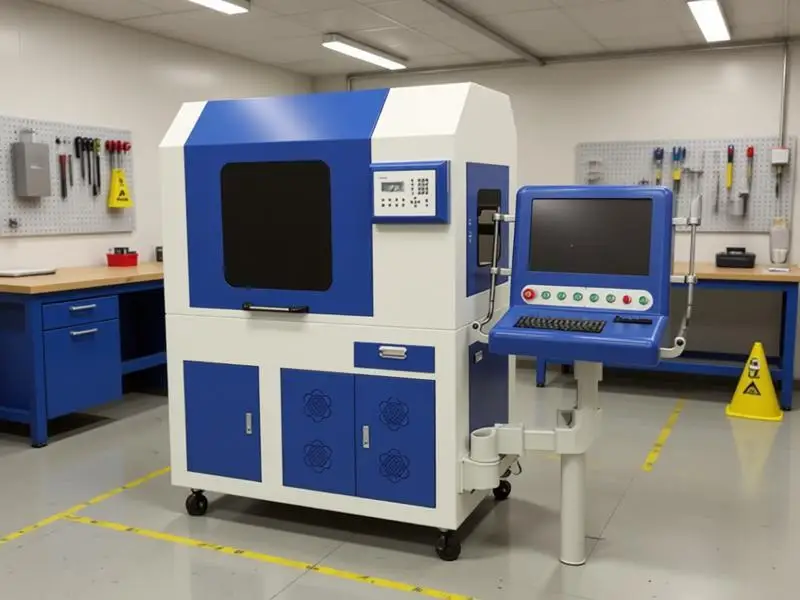
Processing Results
- precision laser drilling
- laser micro-hole machining
- laser drilling machine
- laser drilling equipment
- jiajiayong laser driling
Details
In industrial filtration, pharmaceutical purification, water treatment, petrochemical engineering and other sectors, the micropore density and consistency of filter screens directly determine filtration accuracy and flux. A qualified filter screen usually requires hundreds of thousands or even millions of micropores processed on thin plates or foils, with pore diameters ranging from 0.05mm to 0.5mm, uniform pore spacing, and burr-free, clog-free edges. When dealing with such high-density micropore groups, traditional mechanical punching or etching processes often suffer from low efficiency, out-of-control precision, or excessive cost. Jiajiayong Laser, which has focused on precision laser drilling for 29 years and cooperates in depth with the Laser Institute of the Chinese Academy of Sciences, would like to discuss with you today how micron-scale laser drilling technology makes the processing of high-density filter screens reliable, efficient and economical.
I. Three Core Challenges in Filter Screen Micropore Processing
1. Aperture Consistency and Flux Control
Each micropore on the filter screen acts as a fluid channel. If the aperture deviation exceeds ±3μm, the filtration accuracy of the entire screen will fluctuate, and the flux will be uneven, affecting the stability of downstream processes. Die wear during mechanical punching will lead to gradual enlargement of the aperture, and side etching during etching will make the hole wall trapezoidal, both of which will damage consistency.
2. Layout Efficiency of High-Density Group Holes
For a 300mm-diameter circular screen that requires 500,000 0.1mm micropores, traditional mechanical punching requires multiple die changes, each taking several hours, and the die cost is extremely high. Although etching can be formed in one go, the mold opening cost often amounts to tens of thousands of yuan, which is not affordable for small batches.
3. Hole Wall Quality and Service Life
Filter screens are subjected to fluid scouring and pressure fluctuations during use. If there are burrs or microcracks on the hole wall, these defects will become stress concentration points, leading to premature damage of the screen. The non-contact characteristic of laser processing fundamentally eliminates burrs, and the cold processing mechanism of ultrafast laser compresses the heat-affected zone to the submicron level, with smooth and crack-free hole walls, significantly extending the service life of the screen.
II. How Laser Solutions Break Through the Limitations of Traditional Processes
Jiajiayong Laser's precision micropore processing equipment adopts UV nanosecond laser or femtosecond laser, matched with a high-speed galvanometer and automatic zoom system, and designs an efficient processing strategy specifically for high-density micropore groups.
1. Flight Drilling Mode, Efficiency Increased by More Than 10 Times
Traditional laser processing requires fixed-point stay for each hole, while our equipment adopts the "flight drilling" technology — the galvanometer emits light continuously during movement, without decelerating at each hole position. Matched with a double-station rotary table, one station is processed while the other is loaded and unloaded, and the comprehensive beat can reach more than 6,000 holes per minute. For a screen with 500,000 holes, the pure processing time is less than 2 hours.
2. Visual Positioning and Adaptive Compensation to Ensure Consistency of Group Holes
Thin plates may undergo micro-deformation due to stress release during processing, resulting in hole position deviation. The equipment identifies the Mark points on the workpiece in real time through the CCD vision system, automatically compensates for the deformation, and ensures that the position accuracy of each hole is within ±5μm. At the same time, the online aperture detection module measures once per row of holes processed, and immediately fine-tunes the energy parameters when a deviation trend is found, controlling the aperture standard deviation of the entire screen within 1.5μm.
3. Burr-Free, Deformation-Free, No Secondary Processing Required
The focused laser beam can be as small as 3μm in diameter, and the material is directly gasified without mechanical cutting force, so the hole wall is smooth and burr-free, and the thin plate is not deformed as a whole. The processed screen can be put into use directly, eliminating the deburring and leveling processes required by traditional processes.
III. Jiajiayong Laser's Delivery Capability in the Filter Screen Field
Based on 29 years of technical accumulation and more than 500 successful cases, Jiajiayong Laser has achieved the following verifiable engineering indicators in the field of precision filter screen processing:
| Indicator Item | Measured Value |
| Minimum Processing Aperture | 3μm |
| Processing Accuracy (Static Repeat Positioning) | ±1μm |
| Maximum Drilling Speed | 100 holes/second |
| Aperture Consistency | CPK ≥ 1.67 |
| Hole Wall Quality | No burrs, no flash, no heat affected zone |
| Material Compatibility | Stainless steel 304/316L, titanium alloy, copper, nickel, Hastelloy, polymer, etc. |
| Supported Hole Types | Round holes, square holes, special-shaped holes, tapered holes, stepped holes, group hole arrays |
| Screen Format | Maximum processing size 600mm×600mm (larger sizes can be customized) |
| Automation Integration | Supports automatic loading and unloading, visual positioning, online detection, MES data traceability |
Our equipment supports exclusive non-standard customization, and can provide complete solutions from stand-alone machines to fully automated production lines according to the specific needs of customers (material, aperture, density, format, batch). At present, we have delivered high-density micropore group processing production lines for many filter equipment enterprises, with a single-machine daily capacity of more than 2,000 pieces (calculated based on 0.1mm aperture, 500,000 holes per piece).
IV. Cost Accounting: Comprehensive Advantages of Laser Solutions
Take 304 stainless steel thin plate (thickness 0.2mm, aperture 0.1mm, hole spacing 0.2mm, 500,000 holes per piece, monthly output 10,000 pieces) as an example:
1. Traditional etching solution: Mold opening fee is 20,000-30,000 yuan per model, processing fee per piece is about 0.5 yuan, total monthly cost is about 50,000 yuan (excluding mold amortization), and new mold opening is required when changing models, with a cycle of 2-3 weeks.
2. Laser solution: No mold opening required, processing fee per piece is about 0.15 yuan (including equipment depreciation, consumables, electricity), total monthly cost is about 15,000 yuan. Model change only requires replacing the drawing, which can be completed on the same day.
The laser solution saves 35,000 yuan per month, and has higher flexibility, which can adjust the aperture and layout at any time to meet the market demand of multiple varieties and small batches.
V. Suggestion for You: Send Samples for Verification, Let the Data Speak
Micron-scale laser drilling for precision filter screens is not a theoretical possibility, but a mature process verified by many filter equipment enterprises. We suggest: send a piece of your filter screen sample and drawings to the Shenzhen Application Verification Center. We provide free sample processing, and issue a process report containing the following contents within 3-5 working days:
1. Aperture CPK and group hole consistency data
2. SEM photos of the hole wall (to verify no burrs and no recast layer)
3. Flux test comparison (laser solution vs traditional solution)
4. Beat estimation and three-year total cost comparison
If you find it suitable, we can further discuss the equipment plan; if not, you will at least get a set of professional data, which is also of reference value for your subsequent process improvement.
For 29 years, the tenet of Jiajiayong Laser has always remained unchanged: to make no hole difficult to drill in the world. We will accompany you to easily handle the high-density micropore groups of precision filter screens with laser technology.
Need a similar processing solution?
Contact our technical experts for a customized solution
Contact Us: +8618682295530