Drilling 0.3mm Group Holes in 8mm Thick Plastic Extrusion Die Head: Traditional Drill Press Nightmare vs Laser Excellence
Those in plastic extrusion molds know that the flow holes, filter holes, and exhaust holes in die heads are typically around 0.3mm in diameter but need to penetrate 8mm thick steel plates
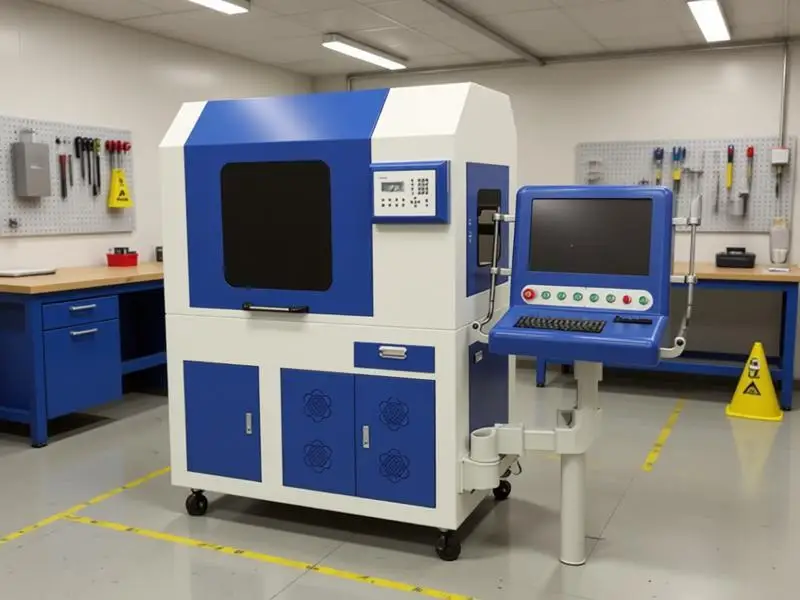
Processing Results
- laser drilling
- laser drilling machine
- precision laser drilling
- lase micro-hole machining
- laser drilling equipment
Details
In the plastic extrusion industry, the extrusion die head is the core component of the entire production line. Whether processing pipes, sheets, or profiles, the molten material must pass through the precision hole system on the die head to achieve final forming. The machining accuracy and efficiency of these holes directly determine the quality and delivery cycle of the die head.
Traditional Drill Press Processing of 0.3mm Group Holes: A Prolonged Nightmare
Those in the plastic extrusion mold industry are well aware that the flow holes, filter holes, and exhaust holes in extrusion die heads typically have diameters around 0.3mm, yet must penetrate 8mm thick die steel. This micro-hole machining with a depth-to-diameter ratio approaching 27:1 is virtually an impossible task for conventional drill presses.
First, 0.3mm drill bits are extremely fragile — any slight deviation causes them to snap. Second, the 8mm penetration depth means the drill bit has an excessive length-to-diameter ratio, resulting in difficult chip evacuation and poor heat dissipation. Drill breakage becomes routine. A single die head often requires dozens or even hundreds of group holes, and every broken drill means stopping the machine to extract the remnant, re-aligning the hole, and the entire machining cycle is extended indefinitely.
Three Major Pain Points of Conventional Processes
First, extremely low efficiency. A skilled operator on a standard drill press may take over 30 minutes to machine a single 0.3mm×8mm through-hole, with a success rate below 70%. For a die head with dozens to hundreds of holes, machining alone can consume days or even weeks.
Second, precision is difficult to guarantee. Micro-drill bits tend to deviate during deep-hole machining, making it hard to control hole straightness and positional accuracy within ±0.02mm. However, plastic extrusion demands extremely high uniformity from the die head hole system — if any hole is slightly larger or smaller, the extruded product will have uneven wall thickness, directly affecting product quality.
Third, costs remain persistently high. Frequent drill breakage not only wastes drill bits but also damages the workpiece surface. Combined with labor costs and time costs, the overall machining expense of the conventional process is very high.
Laser Drilling: The Ideal Solution for 0.3mm Group Holes in 8mm Thick Die Heads
By comparison, laser drilling technology demonstrates overwhelming advantages in this type of high depth-to-diameter ratio micro-hole machining. Our laser drilling system uses high-energy pulsed laser beams with a focused spot size controllable within 0.1mm, capable of easily penetrating 8mm thick die steel with hole diameter accuracy reaching ±0.01mm.
Core Advantages of Laser Drilling
Non-contact processing is the primary advantage. The laser beam has no mechanical contact with the workpiece, eliminating issues such as tool wear and drill breakage. The hole wall surface finish is high, requiring no secondary processing. Meanwhile, laser drilling is extremely fast — a single 0.3mm×8mm deep hole can be completed in just seconds, delivering efficiency tens of times greater than conventional drill presses.
For group hole machining, paired with a high-precision CNC positioning platform, laser drilling enables fully automated batch processing. The operator simply imports the CAD drawing, sets hole coordinates and machining parameters, and the equipment automatically completes all holes sequentially per the program. Positional accuracy is consistently maintained within ±0.01mm, with uniformity far surpassing manual operation.
Actual Machining Case Study
Take a customer's PE pipe extrusion die head as an example: the die head material is H13 die steel, 8mm thick, requiring 128 filter holes with a diameter of 0.3mm, hole spacing of 1.2mm, arranged in a quincunx pattern. Conventional drill press machining would take 5 days with a scrap rate as high as 20%. After switching to laser drilling, all 128 holes were completed within 4 hours, with a 100% pass rate and hole wall roughness of Ra0.8, fully meeting the customer's technical requirements.
Why Choose Our Laser Drilling Solution
We have been deeply engaged in the field of laser micro-hole machining for many years, accumulating extensive process experience specifically for high depth-to-diameter ratio micro-hole machining in plastic extrusion die heads. From process design to batch production delivery, we provide one-stop services to help mold enterprises significantly shorten delivery cycles, reduce machining costs, and improve product quality.
Whether you need single-piece prototyping or batch production, our laser drilling system can provide you with high-precision, high-efficiency solutions. Welcome to bring your drawings or samples for test machining — we let the results speak for themselves.
Need a similar processing solution?
Contact our technical experts for a customized solution
Contact Us: +8618682295530