Process Optimization of High-Density Laser Drilling for Stainless Steel Filter Mesh Sheets
It is a common consensus among practitioners in the filtration equipment manufacturing sector that stainless steel filter mesh sheets appear to be very simple products, yet a series of tough problems will arise once high-density micropore processing is involved. For instance, if you need to drill hundreds of thousands of 0.1mm apertures on a 0.2mm thick 304 stainless steel plate with a pore pitch of merely 0.15mm, problems will follow: thermal accumulation causes burrs on the pore wall, the thin sheet deforms under heat, and the consistency of aperture diameter will fluctuate during mass production.
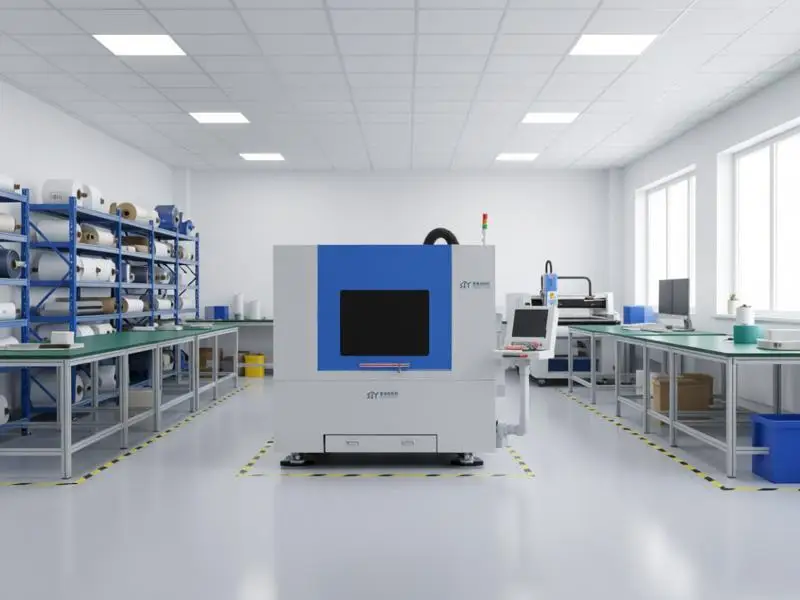
Processing Results
- precision laser drilling
- laser micro-hole machining
- laser drilling machine
- laser drilling equipment
- jiajiayong laser dirilling
Details
For those in the filtration equipment industry, it is common knowledge that stainless steel filter mesh sheets may seem simple at first glance. However, when it comes to high-density micropore processing — for example, drilling hundreds of thousands of 0.1mm pores on a 0.2mm thick 304 stainless steel plate with a pore spacing of only 0.15mm — a series of challenges emerge: thermal accumulation causes burrs on the pore walls, the thin plate deforms under heat, and aperture consistency fluctuates during mass production. Traditional punching molds wear out quickly, while the etching process cannot achieve such a high density of pores. Jiajiayong Laser, which has specialized in precision drilling for 29 years and cooperates deeply with the Laser Institute of the Chinese Academy of Sciences, would like to discuss with you today how to optimize the high-density laser drilling process for stainless steel filter mesh sheets to balance efficiency, consistency and cost at the same time.
I. Material Properties: How to Tame the "Thermal Sensitivity" of Stainless Steel
The thermal conductivity of stainless steel is only 1/3 that of pure iron, so heat tends to accumulate locally during laser processing. Densely arranged micropores are like tiny stoves, with heat overlapping between adjacent holes. If left uncontrolled, the temperature of the pore walls may exceed 300°C, leading to material melting, oxidation and even deformation.
Our solution is the "intermittent pulse + block scanning" strategy. The entire mesh sheet is divided into several small blocks. After processing one block, the laser head moves to the next block, leaving sufficient time for the previous block to dissipate heat. Meanwhile, a short pause (0.5-1ms) is inserted after every 5-10 holes are processed, allowing heat to dissipate through the substrate. Actual measurement shows that when processing 0.1mm pores with 0.15mm spacing in a dense array on 0.2mm thick 304 stainless steel, the temperature rise of the pore walls is controlled within 40°C, with no oxidative discoloration or thermal deformation.
II. Dense Arrangement: How to Avoid Interference Between Adjacent Holes
When the pore spacing is only 0.15mm, the material between adjacent holes is extremely thin. If the laser parameters are inappropriate, the heat from the previous hole will soften the surrounding material, resulting in an oversized aperture of the subsequent hole or molten nodules on the pore wall.
We adopt the "interlaced skip scanning + variable energy compensation" strategy. Odd rows are processed first, followed by even rows, so that adjacent holes have at least the processing time of one row to cool down. Meanwhile, the energy density is dynamically adjusted according to the position of the hole: holes in the edge area have better heat dissipation conditions, so the energy can be slightly higher; holes in the central area have poor heat dissipation, so the energy is appropriately reduced. In this way, the aperture consistency of the entire mesh sheet can reach a CPK of ≥1.67, with an aperture deviation within ±1.5μm.
III. Mass Production: Balancing Efficiency and Stability
Filter mesh sheets are often produced in batch orders, with tens of thousands or even hundreds of thousands of pieces required per month. Although laser processing has a fast single-hole speed (100 holes per second), the cumulative processing time for hundreds of thousands of holes is still considerable. Moreover, after the equipment runs continuously for several hours, thermal drift of the lens and changes in ambient temperature will cause focus shift, affecting aperture consistency.
Our solution is the "dual-station rotary table + online inspection closed-loop" system. While one station is processing, the other station is used for loading and unloading, doubling the overall cycle efficiency. The built-in real-time focus tracking system of the equipment monitors the focus position at a frequency of 100Hz and automatically compensates for the offset. After each row of holes is processed, the coaxial camera immediately takes photos to measure the aperture, and fine-tunes the energy parameters immediately once a deviation trend is detected. In this way, even after 8 hours of continuous operation, the aperture standard deviation is still controlled within 1.5μm, with no need for mid-process shutdown for calibration.
IV. Jiajiayong Laser's Delivery Capabilities for Filter Mesh Sheets
Based on 29 years of technical accumulation and more than 500 cases in the filtration industry, we have achieved the following verifiable engineering indicators in the field of high-density drilling for stainless steel filter mesh sheets:
| Indicator Item | Measured Value |
| Minimum Aperture | 3μm |
| Processing Accuracy | ±1μm |
| Maximum Drilling Speed | 100 holes/second |
| Aperture Consistency (Whole Plate CPK) | ≥1.67 |
| Hole Wall Quality | No burrs, no recast layer, Ra<0.3μm |
| Material Compatibility | 304/316L stainless steel, titanium alloy, nickel, Hastelloy, etc. |
| Supported Hole Types | Round holes, square holes, special-shaped holes, tapered holes, group hole arrays |
| Maximum Processing Format | 600mm×600mm (customizable) |
| Automation Integration | Supports automatic loading and unloading, visual positioning, online inspection, MES docking |
Our equipment supports exclusive non-standard customization, and we can design the optimal solution according to the customer's requirements for aperture, density, format and batch size. At present, we have delivered fully automatic high-density drilling production lines for many filtration equipment enterprises, with a single-machine daily capacity of more than 2,000 pieces (based on 0.1mm aperture, 500,000 holes per piece).
V. Suggestion for You: Send Samples for Verification, Let the Data Speak
The process optimization of high-density laser drilling for stainless steel filter mesh sheets is not based on empirical guesses, but on the adjustment of measured data. We suggest that you send a sample of your mesh sheet and the corresponding drawings to our Shenzhen Application Verification Center. We provide free sample processing, and will issue a process report including the following contents within 3-5 working days:
· Aperture CPK and whole-plate consistency distribution map
· SEM photos of the hole wall (to verify no burrs and no thermal influence)
· Flux test comparison (laser solution vs traditional solution)
· Cycle time estimation and three-year total cost comparison
If you find it suitable, we can further discuss the equipment plan; if not, you will at least obtain a set of professional data, which is also of reference value for your subsequent process improvement.
For 29 years, the tenet of Jiajiayong Laser has remained unchanged: to make no hole difficult to drill in the world. We will accompany you to find the optimal solution for the high-density micropores of stainless steel filter mesh sheets with laser technology.
Need a similar processing solution?
Contact our technical experts for a customized solution
Contact Us: +8618682295530