Selection Guide for Fully Automatic Laser Drilling Equipment for Stainless Steel Flow Orifice Machining
Anyone working in the hardware processing, fluid control component and filtration equipment industries knows full well that machining stainless steel flow orifices is far from the trivial task of simply "drilling a random hole". A mere 0.1mm aperture deviation, when amplified by hydrodynamic (fluid mechanics) effects, can easily drive the flow rate error far beyond the customer's specified acceptance tolerance range.
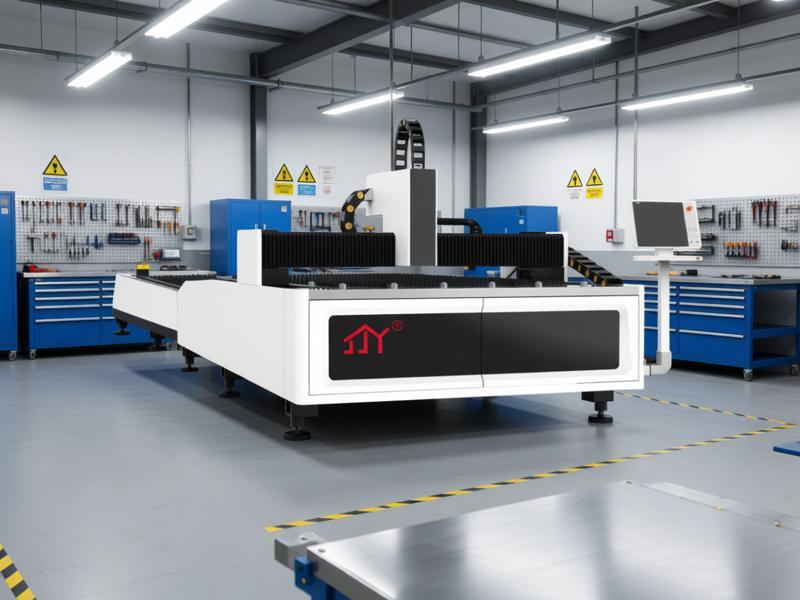
Processing Results
- precision laser drilling
- laser micro-hole machining
- laser drilling machine
- laser drilling equipment
- jiajiayong laser drilling
Details
Anyone engaged in metal fabrication, fluid control component manufacturing and filter element production knows that machining stainless steel flow orifices is far from the trivial act of "punching a simple hole". A 0.1mm deviation in aperture, after being amplified by hydrodynamic effects, will lead to a flow error that far exceeds the customer's acceptable range. We once participated in process analysis for restrictive micro-orifices, and the data shows that: a 0.3% aperture variation will cause a 1.4%~1.7% pressure drop offset; a 0.005mm over-tolerance in aperture will lead to a pressure drop deviation equivalent to 36%~42% of the qualified tolerance, with a rework rate as high as 67%~75%. Another set of simulation studies on fuel supply orifices proves that when the aperture deviation is controlled within ±5μm and the taper is close to 0°, the maximum deviation of water flow is only 1.8%.
This means that equipment selection for flow orifice machining is never about "any device that can pierce the material will do", but requires a systematic balance between aperture consistency, hole wall roughness, taper and batch stability. Jiajiayong Laser, with 29 years of dedication to precision drilling and a client base of over 500 enterprises, now breaks down the selection logic of fully automatic laser drilling equipment for stainless steel flow orifices from an engineer's perspective.
1. Confirm your 4 core parameters first
Before selection, we recommend you take out the drawings and clarify the following four items:
1.1 Material and thickness
Stainless steel grades such as 304 and 316L are the mainstream processing objects. Thin plates (<0.5mm) can be processed at high speed with a fiber laser galvanometer system; medium-thick plates (0.5-2mm) require a segmented piercing process to control the ejection of molten metal; for deep holes in stainless steel with thickness over 2mm, an ultrafast laser solution is recommended for evaluation.
1.2 Aperture and aspect ratio
For conventional apertures (≥100μm), a more cost-effective fiber laser configuration is applicable; for micron-level small apertures (<50μm), UV or femtosecond laser is recommended. When the aspect ratio exceeds 10:1, the "zoom layered scanning + coaxial air blowing" process must be adopted, otherwise the attenuation of bottom energy will lead to out-of-control taper.
1.3 Flow tolerance requirements
This is the most critical indicator. If the customer requires the flow deviation to be ≤2%, the corresponding aperture tolerance usually needs to be controlled within ±5μm, which requires the equipment to have a repetition positioning accuracy of ±1μm and a closed-loop in-line inspection function.
1.4 Production volume and cycle time
For mass production, an automatic loading and unloading system is a must. Jiajiayong Laser's precision micro-group hole equipment achieves a single-hole processing time of about 0.01-0.1s in typical stainless steel sieve processing, with positioning accuracy better than ±3μm, repetition positioning accuracy better than ±1μm, and aperture tolerance controllable between ±2μm and ±5μm.
2. Light source selection: the "absorption window" of stainless steel
Different laser sources have significantly different processing effects on stainless steel:
1. Fiber laser (1064nm): The mainstream choice for conventional stainless steel drilling, with high efficiency and low cost. Suitable for scenarios with aperture ≥100μm and relatively loose requirements on heat impact.
2. UV laser (355nm): Features cold processing properties, with a heat-affected zone controllable within 5μm, ideal for micron-level small holes.
3. Femtosecond laser: With pulse width <400fs and heat-affected zone <1μm, it produces orifices with no recast layer or microcracks on the hole wall, suitable for flow orifices with extreme requirements on hole wall quality.
Selection recommendations:
1. Aperture ≥0.1mm, large production volume, cost-sensitive → Fiber laser + high-speed galvanometer
2. Aperture 0.05-0.1mm, burr-free requirement → UV laser
3. Aperture <0.05mm, aspect ratio >10:1, extreme hole wall requirement → Femtosecond laser
3. Five common process pitfalls in stainless steel drilling (must confirm with your supplier)
Stainless steel laser drilling is far more than "just turn on the machine". The following process defects must be confirmed for corresponding solutions from the supplier during equipment selection:
· Pit 1: Blackened/oxidized orifice: Excessively high laser power or overly long pulse width leads to excess heat and oxidation. You must confirm if the equipment supports pulsed coaxial air blowing, nitrogen protection and dynamic power adjustment.
· Pit 2: Recast layer and burr: Recast layer, tapered holes and spatter problems are common in laser drilling of SUS304 and other stainless steels. The supplier must have the commissioning capability of the "short pulse width + layered scanning + rotary cutting process" to ensure burr-free hole walls.
· Pit 3: Out-of-control taper: The Gaussian distributed laser heat source is the main cause of tapered hole formation. You must confirm if the equipment is equipped with a dynamic focusing system (Z-Scanner) to adjust the focal plane in real time when processing deep holes.
· Pit 4: Piercing spatter on thick plates: When piercing 3mm stainless steel, the violent ejection of molten metal will form elliptical holes or even burst through the material. The supplier must demonstrate the three-stage piercing process of "preheating - penetration - cleaning".
· Pit 5: Batch consistency drift: Lens contamination and ambient temperature change will cause focus drift. The equipment must integrate real-time focus tracking and energy monitoring, so that the aperture drift after 8 hours of continuous operation is controlled within ±1μm.
4. Automation integration: Visual positioning and assembly line docking
Flow orifice processing is usually not an isolated process, which needs to be embedded in the overall production line of hardware parts. Jiajiayong Laser's automation solutions include:
· CCD visual positioning: Adopts coaxial illumination + polarizing filter + adaptive algorithm to eliminate glare interference on the stainless steel surface, with positioning accuracy within ±5μm.
· Dual-station rotary table + buffer track: One station processes while the other completes loading and unloading, doubling the cycle time and avoiding production line blockage.
· Closed-loop in-line inspection: After each hole is processed, the coaxial camera takes photos for measurement, and automatically compensates for over-tolerance or stops for marking.
· MES (Manufacturing Execution System) docking: Processing parameters and inspection data are uploaded in real time to support batch quality traceability.
5. Selection Comparison Table for 3 Typical Configurations
| Configuration Type | Applicable Scenarios | Light Source | Typical Aperture | Automation Level |
| Economic Type | Large aperture, thin plate, mass production | Fiber Laser | ≥0.1mm | Semi-automatic + Visual Positioning |
| Precision Type | Small and medium aperture, high hole wall requirements | UV Laser | 0.05-0.3mm | Full automatic + In-line Inspection |
| High-end Type | Micro-orifice, large aspect ratio, extreme hole wall requirements | Femtosecond Laser | 3μm-0.1mm | Full automatic + 5-axis Linkage + MCS Traceability |
6. Final suggestion: Verify with samples, make decisions based on data
For equipment selection of stainless steel flow orifices, parameter sheets are only for reference, and actual processing performance is the hard truth. We recommend:
Send your stainless steel workpieces and drawings to our Shenzhen Application Verification Center. We will complete free proofing within 3-5 working days, and issue a process report covering the following contents:
· Aperture CPK (Process Capability Index) value and flow deviation calculation
· SEM (Scanning Electron Microscope) photos of the hole wall (to verify no burr or recast layer)
· Taper measurement data
· Consistency curve of 100 consecutive holes
· Cycle time estimation and 3-year total cost comparison
If the result meets your requirements, we can further discuss the detailed equipment configuration; if not, you will at least get a set of professional data that is also valuable for your subsequent process improvement.
For 29 years, the consistent tenet of Jiajiayong Laser is: Making every orifice easy to drill. No matter how precise and demanding the stainless steel flow orifice is, we are willing to work with you to find the optimal solution with solid data.
Need a similar processing solution?
Contact our technical experts for a customized solution
Contact Us: 18927447628