How to Drill 45° Angled Holes in 7mm Thick Steel Fire Disc?
Technology News · 2026/8/17 · 4 views
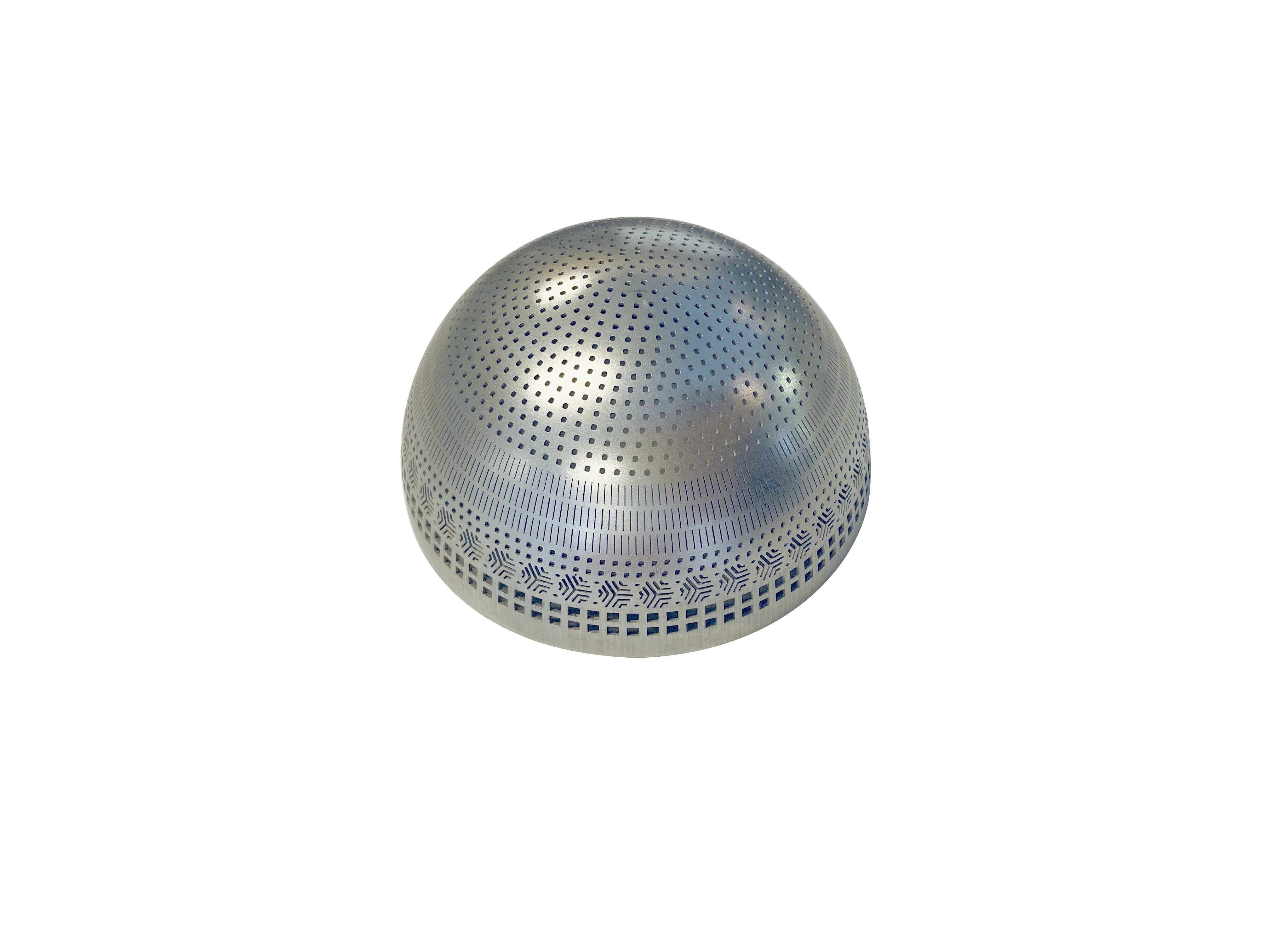
Manufacturers of fire discs, burners, and heat exchangers often encounter designs requiring 45° angled holes to be drilled on the curved surface of 7mm thick steel plates. Learn how laser drilling solves this challenge.
1. Analysis of Process Challenges
The fire disc is a core component of commercial gas stoves and industrial burners, typically formed by stamping 7mm thick carbon steel or stainless steel plates. Drilling 45° angled holes on the curved surface of the disc poses three major challenges for conventional mechanical drilling: first, difficulty in positioning on the curved surface, causing the drill bit to slip; second, difficulty in maintaining the angular precision of angled holes, where deviations directly affect gas mixing efficiency; and third, low drilling efficiency in thick plates with rapid tool wear.
2. Advantages of the Laser Drilling Solution
Using a high-power fiber laser drilling machine can perfectly solve the above problems. Laser drilling is a non-contact process with no tool wear or mechanical stress, making it especially suitable for high-precision angled hole machining in 7mm thick plates. The specific advantages include:
1. Angular Precision of ±0.5°
The laser beam is focused through a five-axis galvanometer system, allowing precise control of the incidence angle. Combined with a rotary worktable, it achieves 45°±0.5° angled hole machining on the curved disc surface, producing smooth, burr-free hole walls without the need for secondary grinding.
2. Over 5x Improvement in Machining Efficiency
Compared to conventional CNC drilling, laser drilling takes only 0.3–0.8 seconds per hole (depending on hole diameter). A 500mm diameter fire disc with over 200 densely distributed angled holes can be fully machined in under 10 minutes. The efficiency advantage becomes even more pronounced in mass production.
3. Recommended Process Parameters
For typical applications involving 7mm carbon steel/stainless steel fire discs, 45° angled holes, and hole diameters of φ3–φ6mm, the following laser process parameters are recommended:
Laser power: 2000W–4000W fiber laser; Auxiliary gas: high-pressure nitrogen (stainless steel) or compressed air (carbon steel); Pulse frequency: continuous or pulse mode selected based on hole diameter; Focal position: dynamically adjusted defocus distance based on plate thickness and angle; Machining speed: 0.3–0.8 seconds per hole, with continuous automated batch processing.
4. Equipment Selection Recommendations
For machining angled holes on curved surfaces such as fire discs, it is recommended to select laser drilling equipment with the following configuration: a five-axis CNC system (supporting X/Y/Z linear axes + rotary axis + tilting head axis) to enable angled hole machining at any angle; equipped with automatic loading/unloading and vision positioning systems for integration into mass production lines; and a customizable worktable based on fire disc size, supporting disc workpieces with diameters from 300 to 800mm.
If you have similar machining requirements for fire discs, burner panels, heat exchanger end caps, and other components, please contact us for a detailed process plan and quotation.
Related Articles
- Cracking the Precision Code of FEP Precision Drilling: A Systematic Practice from Material Properties to Process Control
- An In-Depth Analysis of Laser Drilling Technology for Sieving Meshes: From Core Principles to Industry Applications
- How small a hole can lasers machine? An analysis of the technical boundaries of precision micro-hole machining