How to Crack the Problem of Aperture Consistency in Hole Drilling for Medical Catheters? From "Reliable Drilling" to "Stable Batch-to-Batch Performance"
Technology News · 2026/10/9 · 2 views
In medical device manufacturing, hole drilling for catheters may seem like just a "minor process" — it is nothing more than drilling a few micro-holes in the catheter wall.
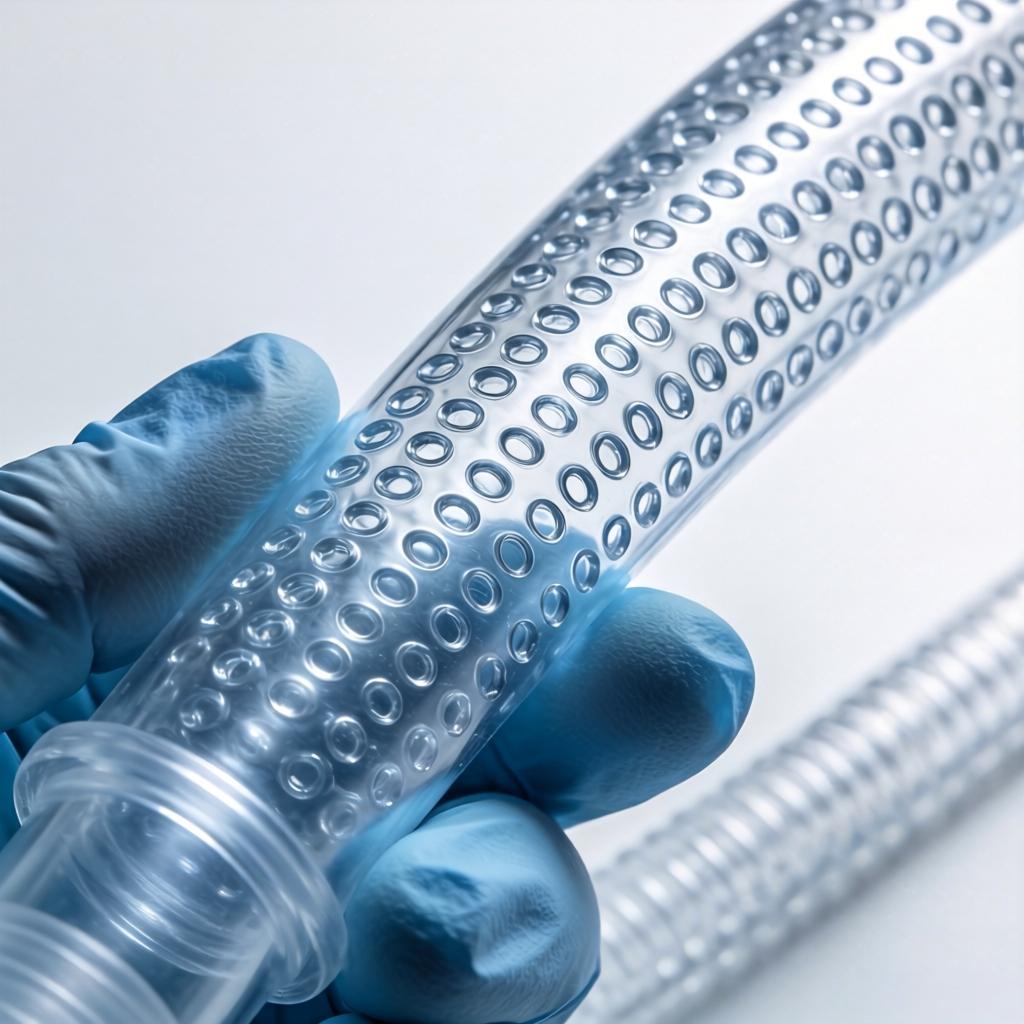
In medical device manufacturing, catheter hole drilling may seem like a trivial "minor process" — nothing more than creating a few microholes in the tube wall. However, when applied to products such as indwelling catheters, drainage tubes, minimally invasive interventional sheaths, and drug delivery catheters, this "minor process" often becomes a critical bottleneck restricting yield and mass production efficiency. The core problem boils down to one single issue: aperture consistency.
A batch of catheters may pass all tests during prototyping, with qualified aperture sizes, smooth edges, and compliant flow rates. But once mass production begins, discrepancies start to emerge between the first and second batches: some holes are too large, some too small, some are mispositioned, and some have micro-burrs on the edges that are barely visible to the naked eye. This is not an isolated case, but a common engineering challenge in medical catheter manufacturing.
I. Why is aperture consistency so difficult to achieve?
To understand the difficulty of achieving "consistency", we first need to recognize the inherent particularities of medical catheters. Unlike flat parts, catheters have a slender, flexible, curved structure, and their processing faces three inherent difficulties:
1. Material elasticity and clamping deformation
Common materials for medical catheters, such as TPU, silicone, Pebax, and PA, all have certain elasticity and flexibility. When the tube is fixed by a fixture, even minor differences in clamping force will cause micro-deformation of the tube wall. After processing, elastic rebound will cause the aperture to deviate from the set value. This dynamic process of "clamping-processing-rebound" makes it difficult to stabilize the repeatable accuracy of the aperture.
2. Wall thickness tolerance and batch fluctuation
The extrusion molding process determines that there are inherent tolerances in wall thickness, outer diameter, and concentricity between different batches of catheters of the same specification. For micron-level apertures (e.g., 0.1mm to 0.5mm), even a ±0.02mm change in wall thickness may lead to measurable aperture deviation. If the process parameters are fixed, the fluctuation of the material itself will directly translate into aperture fluctuation.
3. Cumulative effect of heat-affected zone
The essence of laser processing is "heat-material interaction". When laser energy is applied to the tube wall, the material locally melts and vaporizes to form holes. However, if the energy is not properly controlled or the heat dissipation conditions are uneven, burrs, recast layers, or micro-carbonization may appear on the hole edge. These micro defects not only affect the measured aperture value, but also may become hidden risks for clinical use.
II. The Solution: From "Point Control" to "System Closed Loop"
Through long-term practice serving the medical and health field, Jiajiayong Laser has gradually developed a systematic solution to address the challenge of aperture consistency. The core logic of this solution is not to rely on a single "magic parameter", but to build a closed-loop system covering energy input, process monitoring, and feedback compensation.
1. Precise selection of energy source: making the heat-affected zone "disappear"
For heat-sensitive materials commonly used in medical catheters (TPU, Pebax, silicone, etc.), we prioritize the use of ultraviolet lasers or ultra-short pulse (picosecond/femtosecond) lasers. The pulse width of this type of light source is extremely short, and the energy completes material removal before it can diffuse into the material, which physically inhibits thermal melting and recasting. This results in cleaner hole edges and apertures closer to the design values, laying a foundation for subsequent repeatable accuracy.
2. Closed-loop management of focal plane: preventing the focus from "shifting"
During long-term continuous processing, factors such as thermal drift of the lens, workpiece height differences, and ambient temperature changes will cause the laser focus to shift relative to the workpiece surface. Focus shift directly leads to changes in spot size, which in turn affects the aperture. Our equipment is equipped with an automatic focusing and focus closed-loop compensation system, which can monitor and correct the focus position in real time during processing, ensuring that the focus always stays within the set tolerance window from the first hole to the 10,000th hole.
3. Visual positioning and adaptive compensation: allowing the equipment to "see" the workpiece
Catheters will accumulate certain length and position tolerances during pre-processing procedures such as extrusion, cutting, and printing. If the equipment only drills holes according to "fixed coordinates", these tolerances will be converted into hole position deviations. By integrating a high-resolution CCD visual positioning system, the equipment can "see" the actual characteristics of the catheter (such as the end face, marking line, and joint position) before processing, and automatically compensate for coordinate deviations accordingly. This system can stabilize the hole position repeat accuracy at the micron level, directly supporting the consistency of porous arrays.
4. Reuse of process database: converting "experience" into "parameter packages"
Jiajiayong Laser has accumulated a process database covering hundreds of materials and thousands of working conditions. When faced with a new catheter material and hole type requirement, engineers can retrieve optimized parameters for similar materials from the database as a starting point, greatly shortening the process development cycle. More importantly, these parameter packages can be "locked" and bound to specific SKUs, ensuring that the same set of verified process plans is called for each production run, reducing the subjective influence of personnel on the process.
III. From "Well-Drilled" to "Consistent Batches": Consistency Can Be Verified
The final inspection standard for aperture consistency is not a "perfect sample" during prototyping, but the statistical process control data during continuous mass production. In cooperation with multiple medical device manufacturers, Jiajiayong Laser has established a process verification system covering the following links:
1.First article confirmation: After each batch is started, the first product is inspected by a high-power microscope or image measuring instrument, and production can only continue after confirming that the aperture, hole position, and hole edge quality all meet the specifications.
2.Online sampling inspection and SPC monitoring: Samples are taken at a set frequency during processing, key dimension data are recorded, and control charts are drawn to detect trend deviations in time.
3.Final article comparison: At the end of the batch, the final article is compared with the first article to verify whether the consistency of the entire batch remains within the window.
This system supports Jiajiayong Laser in delivering "batch-verifiable" processing results to customers in the field of medical catheter precision laser drilling. Currently, our equipment serves catheter manufacturing in multiple details segments including in vitro diagnosis, interventional devices, and drug delivery, with a total of more than 500 successful cases.
IV. If You Are Evaluating Solutions: The Most Effective Next Step
Aperture consistency is not a problem that can be automatically solved by "buying a piece of equipment". It requires the collaboration of equipment capability, process experience, and process management. If you are troubled by the consistency of mass drilling of medical catheters, we suggest:
1.Send samples: Provide the catheter material you are currently using (indicate material, outer diameter, wall thickness, hardness), target hole type drawings (aperture, tolerance, arrangement), and daily production capacity target.
2.Free prototyping verification: The application verification center of Jiajiayong Laser will conduct process feasibility tests according to your samples and requirements, and issue a process report including aperture fluctuation range, edge effect, and cycle time estimation.
3.Customized solution: Based on the prototyping results, our engineering team will design an exclusive non-standard customized solution for you, covering equipment selection, automation integration, and process control strategies.
We deeply understand the weight of the word "consistency" in the field of medical manufacturing — it is related to product release, clinical safety, and brand reputation. With nearly 30 years of focus and accumulation, Jiajiayong Laser is willing to be your reliable process partner for this critical process.