Stove Burner Nozzle Drilling: Precision Manufacturing Upgrade Starting from 0.003mm
Technology News · 2026/10/31 · 13 views
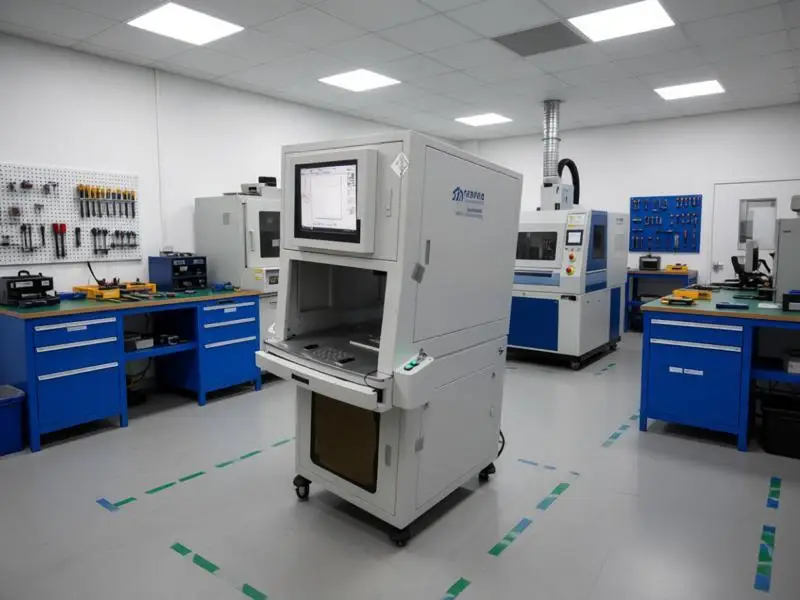
Everyone in the high-end gas appliance sector is well aware that the orifice diameter of stove burner nozzles directly determines combustion efficiency and emission indicators. The latest European energy efficiency standards have tightened the nozzle orifice diameter tolerance to ±3μm, and leading domestic enterprises are also following suit. This means the era of drilling 0.2mm and 0.3mm holes with traditional mechanical drilling machines is fading, and micron-precision laser drilling is becoming the industry standard. Jiajiayong Laser, which has focused on precision drilling for 29 years and cooperates in depth with the Laser Institute of the Chinese Academy of Sciences, would like to discuss with you today what the precision manufacturing upgrade starting from 0.003mm (3μm) can bring to stove burner nozzles.
I. Aperture Accuracy and Combustion Efficiency: The Micron-Scale Butterfly Effect
The core function of a stove burner nozzle is to accurately control gas flow and form a stable flame at the outlet. According to fluid mechanics principles, flow rate is proportional to the fourth power of the aperture diameter — a 10% deviation in aperture leads to a flow rate deviation of over 46%. This means if the machining tolerance of nozzle holes is reduced from the traditional ±15μm to ±3μm, flow fluctuation can be cut from above ±10% to within ±2%.
Hole wall quality is even more critical. Burrs and microcracks left by mechanical drilling will disrupt the flow line of the outflowing gas, leading to flame deflection, flashback or yellow flame. Laser drilling is contact-free and burr-free, with a smooth hole wall (Ra < 0.4μm). The gas flow line is stable when flowing out, the flame shape is regular, and combustion efficiency is naturally higher. We once conducted a comparative test for a gas stove manufacturer: under the same working conditions, nozzles processed by laser drilling reduced CO emissions by 33% and increased thermal efficiency by 3 percentage points compared with those processed by mechanical drilling.
II. Bottlenecks of Traditional Processes: A Forbidden Zone Below 0.1mm
At present, most stove nozzle manufacturers still use mechanical drilling machines or EDM (electrical discharge machining) for processing. Mechanical drilling machines can barely handle apertures above 0.2mm, but once the aperture is smaller than 0.1mm, the drill bit life drops sharply, requiring tool replacement after drilling only dozens of holes, and the burr problem cannot be fundamentally solved. Although EDM can drill small holes, the electrode loss is large, and there is a recast layer on the hole wall, which requires subsequent grinding, leading to low efficiency and high cost.
As the industry trend moves towards smaller apertures (0.05mm, 0.03mm or even 0.003mm) to achieve more precise gas control, traditional processes can no longer keep up. Jiajiayong Laser's equipment can achieve a minimum processing aperture of 0.003mm (3μm) with a repeat positioning accuracy of ±1μm, which opens up a whole new space for nozzle design of high-end gas appliances — smaller apertures mean lower gas consumption, more stable flame and lower emissions.
III. How the Laser Solution Realizes the Upgrade Starting from 0.003mm
III. How the Laser Solution Realizes the Upgrade Starting from 0.003mm For stove burner nozzle processing, Jiajiayong Laser mainly adopts UV nanosecond laser (355nm) or femtosecond laser, depending on the nozzle material and hole wall requirements.
1. Precise matching of energy density: The absorption rate of brass for UV laser exceeds 60%, and the ablation threshold is about 0.8J/cm². We set the single-pulse energy density at 1.2-1.5J/cm², which not only ensures stable material removal, but also avoids aperture expansion caused by excessive ablation.
2. Closed-loop control of focus position: The built-in real-time focus tracking system of the equipment monitors the focus position at a frequency of 100Hz and automatically compensates for offsets, ensuring that the focus of each hole falls in the optimal position. Actual measurement shows that the aperture standard deviation is less than 1.5μm after continuous processing of 1000 nozzles.
3. Online detection and adaptive compensation: After each hole is processed, the coaxial camera immediately takes photos to measure the aperture. If a deviation trend is found, the system automatically fine-tunes the energy parameters to ensure the consistency of the entire batch of apertures.
For ultra-micro holes of 0.003mm, we adopt femtosecond laser combined with a high numerical aperture objective lens, with a focused spot diameter of 1.5μm, and realize stable processing of 3μm aperture with a depth-to-diameter ratio of 5:1 through a spiral layer-by-layer scanning strategy. The hole wall is smooth and burr-free, and no microcracks can be observed under SEM.
IV. Nozzle Processing Capabilities of Jiajiayong Laser
Based on 29 years of technical accumulation and the cooperation background with the Laser Institute of the Chinese Academy of Sciences, Jiajiayong Laser has achieved the following deliverable indicators in the field of micro-hole processing for stove burner nozzles:
| Indicator Item | Measured Value |
| Minimum Processing Aperture | 0.003mm (3μm) |
| Processing Accuracy (Static Repeat Positioning) | ±1μm |
| Aperture Consistency | CPK ≥ 1.67 |
| Hole Wall Quality | No burrs, no flash, no heat affected zone, Ra < 0.4μm |
| Material Compatibility | Brass, stainless steel, cast iron, aluminum alloy, etc. |
| Supported Hole Types | Round holes, tapered holes, stepped holes, special-shaped holes |
| Automation Integration | Can be equipped with automatic loading and unloading, visual positioning, online detection, MES docking to realize unmanned operation |
The equipment supports exclusive non-standard customization, and we also accept来料加工 (contract processing) services. For high-end gas appliance enterprises, we recommend sending samples for trial drilling first, and let the flow test and combustion efficiency data speak for themselves.
V. Suggestion for You: Redefine Your Nozzles Starting from 0.003mm
The precision manufacturing upgrade of stove burner nozzles is not simply a matter of replacing a piece of equipment, but a systematic improvement from aperture accuracy to combustion efficiency. Over the past 29 years, Jiajiayong Laser has served more than 500 enterprises and accumulated a profound process database in the field of micro-hole processing. We suggest: send a batch of nozzle blanks and drawings to our Shenzhen Application Verification Center, we will provide free sample processing, and issue a process report containing the following contents within 3-5 working days:
1. Aperture CPK and flow deviation calculation
2. SEM photos of the hole wall (to verify no burrs and no recast layer)
3. Cost comparison analysis with mechanical drilling/EDM
4. Estimation of combustion efficiency improvement
For 29 years, the tenet of Jiajiayong Laser has always remained unchanged: to make no hole difficult to drill in the world. We will accompany you in the precision manufacturing upgrade of stove burner nozzles starting from 0.003mm, and achieve it with laser technology.
Related Articles
- Drilling 1600 special-shaped micro-holes on a hemispherical surface: Why traditional processes are incapable of realizing this requirement, and how Jiajiayong 5-axis laser processing breaks this technical bottleneck?
- Over 10 million holes with a diameter of 0.1 mm: how can this drilling task be realized with conventional mechanical machining drilling processes?
- Key Quality Control Points for Laser Drilling of Mold Venting System: The Underlying Engineering Logic Behind the Surface Roughness Requirement of Ra < 0.4 μm