How does jiajiayong Laser ensure the precise position of each hole during the laser drilling process?
Technology News · 2026/9/15 · 20 views
Jiajiayong Laser Drilling Machine ensures the positional accuracy of every hole through a systematic project that spans equipment, processing techniques, environment and management. Only by implementing refined control in every single link can micro-level machining precision be truly achieved.
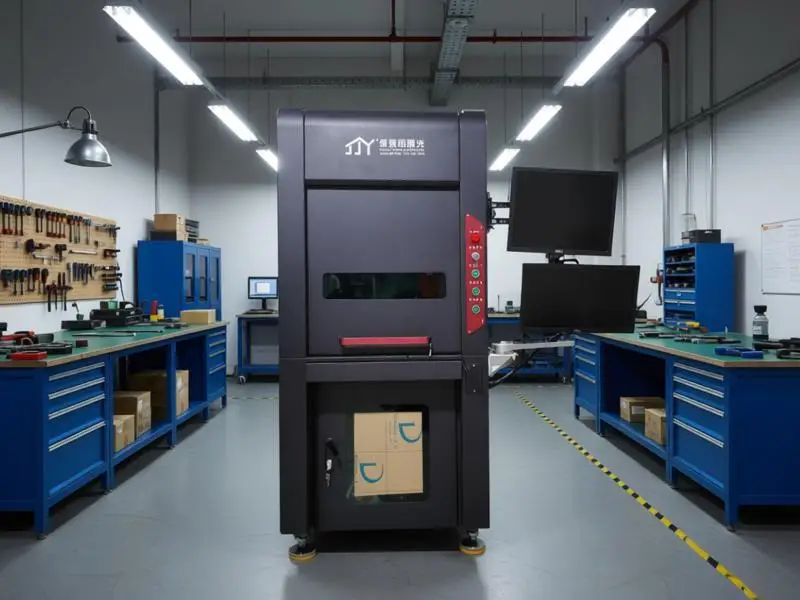
In the field of precision manufacturing, hole position accuracy is one of the core indicators for measuring product quality. Whether it is the microporous structures in medical devices or the cooling holes in aerospace components, the positional deviation of any single hole may undermine the overall performance. Then, how to ensure every hole is positioned with absolute precision during actual processing? This relies not only on advanced equipment, but also on systematic process control and scientific management strategies.
I. Support from High-Precision Positioning Systems
The prerequisite for accurate hole positioning is to have a high-precision motion and positioning platform. Modern laser processing equipment generally adopts precision platforms driven by linear motors and supported by air bearings, whose repeat positioning accuracy can reach within ±1μm. Combined with a high-resolution grating ruler feedback system, position deviations can be corrected in real time to ensure the laser spot accurately lands on the preset coordinates. In addition, optimizing the rigidity of the mechanical structure to reduce vibration and offset during movement provides a stable foundational guarantee for high-precision drilling.
II. Intelligent Visual Positioning and Alignment Technology
Introducing a CCD visual recognition system before processing enables automatic identification of positioning marks (such as targets) on the material, and comparison with the design drawing to achieve precise alignment of the coordinate system. This technology is especially applicable to multi-layer boards or workpieces with pre-existing pre-machined features, and can effectively compensate for issues such as material deformation and clamping errors. Some advanced systems even support dynamic compensation functions, which continuously monitor the position change of the workpiece during processing and automatically adjust the laser path to ensure consistency of hole positions.
III. Stable Environment and Material Preprocessing
Environmental factors have a significant impact on processing accuracy. Temperature fluctuations will cause thermal expansion and contraction of metal materials, while humidity changes may lead to moisture absorption and deformation of non-metallic materials. To this end, many precision processing workshops control the ambient temperature at 23±1°C, maintain the relative humidity at 45±5%, and are equipped with anti-static facilities to reduce external interference. Meanwhile, preprocessing measures such as stress relief treatment and flatness inspection on raw materials can also effectively reduce hole position offsets caused by the inherent properties of the materials.
IV. Process Parameter Optimization and Process Monitoring
Laser drilling is not a simple "piercing" operation, but a collaborative control process involving multiple parameters such as energy density, pulse frequency, focus position, and auxiliary gas. The optimal process window determined through experiments, for example, setting a reasonable pulse overlap rate (usually 50%-80%), can ensure the continuity and roundness of the hole wall. At the same time, the introduction of a real-time monitoring system collects and adjusts key parameters including laser power, focus position and gas pressure at the millisecond level, avoiding processing errors caused by parameter drift.
V. Software Algorithms and Path Planning
Advanced control software can automatically optimize the drilling sequence and path according to material properties, hole diameter and distribution density, so as to reduce cumulative errors. For example, in the processing of high-density group holes, adopting a "hole-skipping" strategy instead of continuous scanning can avoid thermal deformation caused by excessive local temperature rise. Meanwhile, a compensation algorithm is used to correct the distortion of the optical system, further improving the overall positioning accuracy.
VI. Continuous Verification and Quality Traceability
Establishing a sound quality inspection mechanism is the key to ensuring consistency in mass production. Using methods such as microscopic imaging and coordinate measuring machines, inspections on indicators including hole position, hole diameter and roundness are carried out for the first piece and regularly sampled products, with data records generated. These data are not only used for quality judgment of the current production, but also provide an important basis for subsequent process optimization.
Ensuring the precise position of every hole is a systematic project covering equipment, techniques, environment and management. Only by implementing refined control in every link can micro-level machining precision be truly achieved. With the development of intelligent manufacturing technology, future laser processing will be more automated and intelligent, providing stronger technical support for high-end manufacturing.
Translation Notes:
1.ll technical terms strictly follow the standard naming conventions in the international precision manufacturing and laser processing industry: for example, "linear scale" is uniformly translated as the industry-recognized "grating ruler", "Three-dimensional coordinate measuring machine" adopts the widely used professional abbreviation expansion form "coordinate measuring machine".
2.Descriptions for process parameters retain the original professional data (such as temperature and humidity control range, pulse overlap rate), which is consistent with the expression habit of English technical documents for industrial equipment.
3.The logical hierarchy of the original full text is fully retained, and the formal, precise tone suitable for industry technical white papers or official enterprise technical popularization contents is adopted.
Related Articles
- Stove Burner Nozzle Drilling: Precision Manufacturing Upgrade Starting from 0.003mm
- Drilling 1600 special-shaped micro-holes on a hemispherical surface: Why traditional processes are incapable of realizing this requirement, and how Jiajiayong 5-axis laser processing breaks this technical bottleneck?
- Over 10 million holes with a diameter of 0.1 mm: how can this drilling task be realized with conventional mechanical machining drilling processes?