Laser Precision Drilling of Micro-Holes in Automotive Fuel Injectors: A Micron-Level Leap from Atomization Efficiency to Emission Control
Technology News · 2026/11/6 · 16 views
Anyone working in automotive fuel injection systems knows this well: the micro-hole quality of fuel injectors directly determines the engine's combustion efficiency, power output, and emission levels.
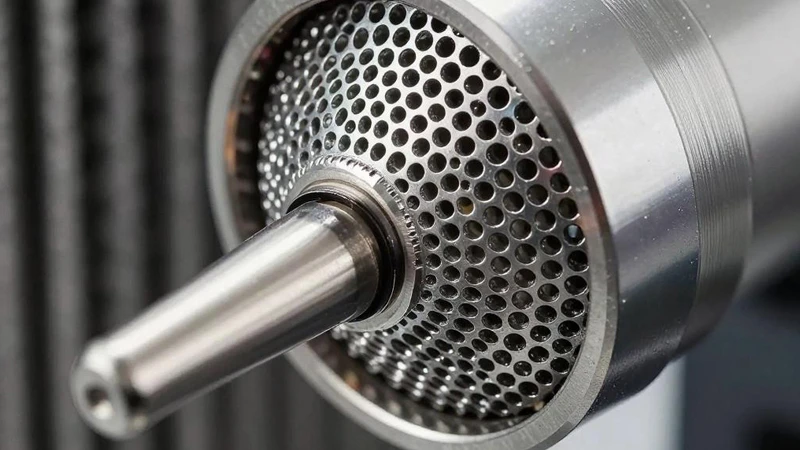
Since the implementation of the China VI b emission standard, the tolerance requirement for injector hole diameter has tightened from ±10 μm to ±3 μm, and the hole-wall roughness requirement has dropped from Ra < 0.8 μm to Ra < 0.4 μm. Conventional mechanical drilling has already reached its limit at hole diameters of 0.1–0.2 mm — short drill life, burrs that are hard to eliminate, and large batch-to-batch consistency swings. JiaJiaYong Laser has focused on precision drilling for 29 years, works closely with the Institute of Laser Technology of the Chinese Academy of Sciences, and has served more than 500 companies. Today we'd like to talk with you about how laser precision drilling can take fuel injector micro-hole machining from "workable" to "precisely controlled."
I. Core Metrics for Injector Micro-Holes: Atomized Droplet Size and Flow Consistency
A fuel injector works by forcing high-pressure fuel through micro-holes, forming fine droplets that mix with air. The smaller the droplet size, the more complete the combustion and the lower the emissions. Droplet size is directly governed by hole diameter, hole length, and hole-wall roughness:
1. A 1 μm deviation in hole diameter produces roughly a 4% deviation in flow rate. If the flow deviation across a set of six injectors exceeds ±2%, the engine will suffer vibration and unstable power output.
2. When hole-wall roughness exceeds Ra 0.5 μm, the fuel generates turbulent flow inside the hole, the spray cone angle diverges, and part of the fuel is discharged before it burns fully, causing HC and CO to exceed limits.
3. Hole-mouth burrs or recast layers may detach during long-term service, clogging the spray holes or damaging the injector needle valve.
Injector micro-hole machining must therefore simultaneously satisfy: hole diameter tolerance ±2 μm, hole-wall roughness Ra < 0.4 μm, no burrs, no recast layer, and batch-to-batch CPK ≥ 1.67.
II. The Bottleneck of Conventional Processes: Mechanical Drilling and EDM Have Both Hit the Ceiling
Below 0.15 mm, mechanical drilling uses drills only 0.1–0.15 mm in diameter with an aspect ratio exceeding 20:1 — extremely poor rigidity. A tool change is needed every few dozen holes, and burrs at the hole mouth are unavoidable; the subsequent deburring step not only adds cost but may also damage the hole-mouth chamfer. In volume production, drill wear gradually shrinks the hole diameter, so the first and last parts of the same batch may differ by more than 5 μm.
EDM can produce small holes, but electrode wear is severe — the electrode must be replaced or dressed every few holes, giving low efficiency and high cost. EDM also leaves a recast layer on the hole wall (about 5–10 μm thick); the bond between the recast layer and the substrate is weak, so it tends to spall under high-pressure fuel washing, causing premature injector failure.
III. Laser Precision Drilling: A Systematic Breakthrough from Energy Control to Hole-Wall Quality
The precision drilling process JiaJiaYong Laser has developed for fuel injectors achieves micron-level control across three dimensions:
1. Precise matching of energy density
Injectors are typically made of stainless steel (such as 440C or 17-4PH) or tool steel. We use a UV nanosecond laser (355 nm) and exploit the high absorptivity of stainless steel in this band (>60%), setting the single-pulse energy density at 1.3–1.6 times the ablation threshold. Combined with a 40–60% pulse overlap ratio, this delivers stable removal with no expansion of the heat-affected zone. For smaller holes (<0.08 mm), we switch to a femtosecond laser, compressing the heat-affected zone to the sub-micron level.
2. Process assurance of hole-wall quality
A helical layer-by-layer scanning strategy removes 0.5–1 μm per layer, while coaxial high-pressure nitrogen (0.5–0.8 MPa) forcibly expels the molten material. The resulting hole-wall roughness is Ra < 0.3 μm, with no recast layer and no micro-cracks under SEM. A micro-chamfer (about 0.02 mm × 45°) forms automatically at the hole mouth, which benefits fuel flow.
3. Closed-loop control of batch consistency
The system incorporates a real-time focus tracking system (100 Hz sampling) that compensates for lens thermal drift. After each injector is machined, a coaxial camera immediately measures the hole diameter and feeds the data back to the energy adjustment module. In a measured run of 1,000 consecutive injectors, the standard deviation of hole diameter was under 1.5 μm, with CPK ≥ 1.67.
IV. JiaJiaYong Laser's Delivery Capability in Fuel Injectors
Building on 29 years of accumulated technology and more than 500 precision micro-hole projects, JiaJiaYong Laser has achieved the following verifiable engineering metrics in automotive fuel injector machining:
| Metric | Measured value |
| Minimum hole diameter | 0.03 mm (30 μm) |
| Hole diameter tolerance | ±2 μm |
| Hole-wall roughness Ra | < 0.3 μm |
| Recast layer thickness | None (femtosecond process) |
| Hole-mouth burrs | None |
| Hole diameter consistency CPK | ≥ 1.67 |
| Material compatibility | Stainless steel 440C/17-4PH, tool steel, tungsten carbide, etc. |
| Hole geometry | Straight, tapered, stepped, and special-shaped holes |
| Automation integration | Automatic loading/unloading, vision positioning, in-line inspection, MES integration |
Equipment can be customized on a dedicated, non-standard basis. Depending on hole diameter, hole count, angle, and material, we can provide a complete solution ranging from a stand-alone machine to a fully automated production line. Our mission: no hole in the world should be hard to drill.
V. Our Advice: Send Samples for Validation and Let the Data Speak
Injector micro-hole machining bears directly on engine performance and emission compliance. The most reliable approach is to send a batch of injector blanks and drawings to our Shenzhen Application Validation Center. We will run free sample trials and issue a process report within 3–5 working days covering:
1. Hole diameter CPK and calculated flow deviation
2. SEM images of the hole wall (5,000× magnification, verifying the absence of a recast layer)
3. Atomized droplet size comparison (laser process vs. conventional process)
4. Cycle-time estimate and three-year total cost of ownership comparison
If it looks right to you, we can go deeper into equipment options; if not, you still walk away with a set of professional data that is valuable as a reference for your own process improvement.
For 29 years, JiaJiaYong Laser's mission has remained unchanged: no hole in the world should be hard to drill. For the precision micro-holes in automotive fuel injectors, we'll be with you every step — starting from micron-level accuracy and contributing to every efficient combustion.
Related Articles
- How is the pore size consistency of laser-drilled 2000-mesh precision sieve mesh guaranteed?
- Stove Burner Nozzle Drilling: Precision Manufacturing Upgrade Starting from 0.003mm
- Drilling 1600 special-shaped micro-holes on a hemispherical surface: Why traditional processes are incapable of realizing this requirement, and how Jiajiayong 5-axis laser processing breaks this technical bottleneck?